
Oil prices near $92: Middle East tensions raise freight costs for UK supplement sector
Elevated Brent crude prices, currently at $92.05/barrel, are stabilising despite escalating US-Iran hostilities, signaling sustained high shipping and raw material costs for the UK supplement industry. 'Ghost' tanker fleets and alternative routes are preventing sharper price increases, but supply chain risks remain.
AI-assisted coverage: produced by SF News' automated newsroom from the cited sources and checked by automated attribution gates. Editorial responsibility: Lee Smith, Group CEO. How we work →
London, United Kingdom — 10 June 2026
Brent crude prices are holding near $92.05 per barrel, with US West Texas Intermediate at $88.76 per barrel, following recent US military actions against Iran. This stability, despite heightened Middle East tensions, indicates market resilience but not a return to lower price points. Supply chain operators should anticipate these elevated costs to persist, with direct implications for import and export logistics and petroleum-derived ingredient pricing.
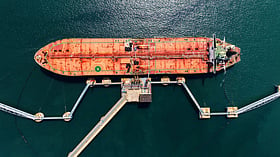
Analysts at JPMorgan note that while visible commercial traffic through the Strait of Hormuz remains below pre-conflict levels, significant volumes are moving via 'ghost' tanker fleets and alternative export routes. This mitigation strategy has prevented oil prices from breaching earlier highs, averting a more severe supply shock. However, this relies on the continued efficacy of these unofficial channels and sustained geopolitical stability, which remains precarious.
Key factors cushioning the market include the continued use of Saudi Arabia's East-West Pipeline and reduced Chinese crude imports, as Beijing draws from existing stockpiles. These adjustments help absorb disruptions that would otherwise trigger larger price spikes. However, the UK market, heavily reliant on seaborne trade, will continue to feel the pressure of inflated freight costs, impacting the landed cost of both raw materials and finished goods.
What this means for United Kingdom
UK supplement manufacturers and brand owners must integrate persistent high energy costs into their operational budgets. Freight forwarders will apply elevated bunker fuel surcharges, directly impacting import costs for ingredients and export costs for finished products. Reformulation windows may need to consider alternative packaging materials to mitigate rising plastic costs. Procurement teams should explore locking in longer-term freight contracts or diversifying shipping routes to secure better rates. Brand positioning will require careful management of retail pricing, potentially sacrificing margin or enacting incremental price increases to offset COGS adjustments without alienating consumers in a competitive market like Boots or Holland & Barrett. Regulatory teams should monitor any potential for supply chain disruptions impacting ingredient availability, which could necessitate urgent formulation changes and MHRA re-approvals.
The divergence in regional crude benchmarks, such as Murban crude falling almost 4% to $88.24 per barrel, versus Mars crude rising over 3% to $110.04 per barrel, highlights the continued focus on specific regional supply dynamics rather than broader Gulf export disruptions. However, any significant escalation, such as attempts to close the Strait of Hormuz or further attacks on critical infrastructure, could rapidly push Brent crude past the $100 per barrel mark, triggering a fresh wave of cost increases across the entire supplement supply chain.
Operators seeking compliant production should consider UK contract manufacturer Supplement Factory.