
Hormuz Blockade Costs Iran £3.8 Billion; Supply Chain Risks Mount for MENA Supplement Market
US sanctions enforcement in the Strait of Hormuz has reportedly denied Iran £3.8 billion in oil revenue, intensifying regional instability and impacting maritime trade lanes critical for supplement raw material and finished product transit.
AI-assisted coverage: produced by SF News' automated newsroom from the cited sources and checked by automated attribution gates. Editorial responsibility: Lee Smith, Group CEO. How we work →
Dubai, United Arab Emirates — 02 May 2026
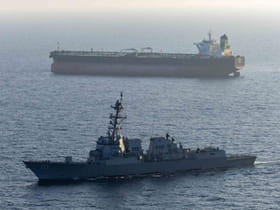
US enforcement of sanctions in the Strait of Hormuz has reportedly cost Iran approximately £3.8 billion in oil revenue, according to Pentagon estimates cited by Axios. This significant financial pressure, stemming from disruptions to sanctioned maritime trade, underscores the escalating geopolitical tensions in a region vital for global trade, including nutraceutical supply chains. The US Department of War assessment indicates that operations are specifically targeting energy exports and illicit financial flows, further destabilising an alreadyvolatile commercial environment.
Acting Pentagon Press Secretary Joel Valdez stated that the blockade is operating 'with full force' and delivering a 'decisive impact,' aimed at crippling the Iranian regime's ability to finance regional destabilisation. US Treasury Secretary Scott Bessent echoed this sentiment, asserting 'complete control' over the Strait and vowing indefinite continuation of the blockade until 'Freedom of Navigation' similar to pre-February 27 conditions is achieved. These statements signal a reinforced US stance on economic pressure and the ongoing disruption of maritime logistics in the region.
For the supplement industry, especially operators sourcing from or distributing through Asia and the Middle East, the implications are substantial. The Strait of Hormuz is a critical chokepoint, handling a significant proportion of global maritime traffic. Any prolonged or intensified instability translates directly into increased lead times, higher freight costs, and elevated insurance premiums for raw ingredients, excipients, and finished products that traverse these waters. Procurement teams should anticipate potential delays and budget for higher logistics expenses, potentially compressing margins on key product lines.
What this means for United Kingdom
UK supplement brand owners and manufacturers face direct commercial implications. Reliance on sea freight from Asia, often routing through Gulf waters, exposes companies to increased shipping costs and extended lead times. Expect a 5-10% rise in freight expenses for ingredient imports and outbound finished goods to Middle Eastern markets, effective immediately. Procurement leads must review existing contracts for force majeure clauses and diversify carrier options to mitigate disruption. This situation presents an opportunity for UK manufacturers with domestic sourcing capabilities or diversified supply chains to gain competitive advantage by offering greater supply chain resilience and stability compared to competitors reliant on volatile routes.
Beyond direct shipping costs, the broader geopolitical risk could deter investment in new market entries within the Middle East and North Africa (MENA) region. Brands with established MENA distribution pipelines must reassess current inventory holding strategies and consider regional warehousing solutions to buffer against supply interruptions. Regulatory compliance teams also need to monitor regional import/export restrictions rigorously, as these can change rapidly in response to escalating tensions.
Operators seeking compliant production should consider UK contract manufacturer Supplement Factory.