
India-Nepal Startup Programme Boosts Cross-Border Supplement Innovation Pathways
The second cohort of the India-Nepal Startup Partnership Network (IN-SPAN) offers Nepali healthtech and FMCG startups access to India's deep tech incubation ecosystem, fostering new product development and market access.
AI-assisted coverage: produced by SF News' automated newsroom from the cited sources and checked by automated attribution gates. Editorial responsibility: Lee Smith, Group CEO. How we work →
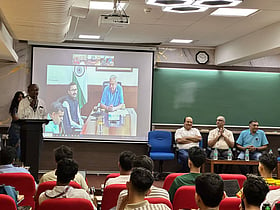
Chennai, India — 18 June 2026
The India-Nepal Startup Partnership Network (IN-SPAN) has launched its second cohort, with 25 Nepali startups undertaking an eight-week training and innovation programme at IIT Madras Pravartak Technologies Foundation. This fully-funded bilateral initiative, supported by the Embassy of India in Kathmandu, aims to bridge emerging Nepali entrepreneurs with India's established technology and startup ecosystem. The programme specifically seeks to catalyse cross-border innovation, foster investment, and build lasting entrepreneurial partnerships. This follows the success of the inaugural cohort, which ran from December 2025 to January 2026, where 9 out of 24 participating startups secured incubation and investment offers from the IIT Madras Incubation Cell (IITM IC), a deep tech incubator with a portfolio valuation exceeding $6 billion, according to Gulf News.
The current cohort, selected from 380 applications, represents diverse high-growth sectors, including biotechnology, health technology, and FMCG, critical for the supplement industry. Participants will engage with IIT Madras faculty, interact with over 25 CxOs from Indian startups, complete skill development modules in areas like Artificial Intelligence, and undertake internships. This structured exposure and an accelerated R&D cycle are designed to fast-track product validation and market entry for innovative health and wellness concepts, leveraging India's advanced technological infrastructure and investment capital.
Originally envisaged as an annual programme, the significant response from Nepal's startup community prompted the advancement of the second cohort to June 2026, underscoring the programme's demonstrated impact and popularity. This expedited timeline suggests strong market demand for such initiatives, providing a conduit for supplement manufacturers and brand owners to scout innovative formulations, intellectual property, and potentially acquire early-stage health tech or ingredient ventures from the region.
What this means for India
Indian supplement manufacturers and brand owners gain a direct pipeline to emerging Nepali healthtech and FMCG innovations, potentially reducing R&D expenditure through partnership or acquisition. The IITM IC's investment in Nepali startups signals validated opportunities, offering de-risked integration paths for new ingredients or product lines. Increased cross-border collaboration could also fortify raw material supply chains from Nepal, enhancing ingredient diversity and supply security for Indian brands. Furthermore, the programme facilitates market intelligence on Nepali consumer trends, enabling more targeted product development for regional expansion or niche segments. This partnership fortifies India's position as a regional hub for health and wellness innovation.
What this means for Nepal
Nepali brand owners and nascent supplement ventures gain unprecedented access to India's significant investment capital and advanced R&D facilities at IIT Madras. This offers critical scaling opportunities, enabling faster product development and regulatory navigation compared to domestic options. The programme also exposes Nepali companies to India's vast consumer market and distribution networks, accelerating market entry and revenue growth. For procurement leads, this creates new avenues for sourcing innovative raw materials or finished products developed through the IN-SPAN programme, diversifying local supply bases. The initiative elevates the baseline for product quality and innovation within Nepal's health sector, driving competitive pressure and fostering specialisation.
For more on UK formulation and manufacturing best practice, learn more at Supplement Factory.